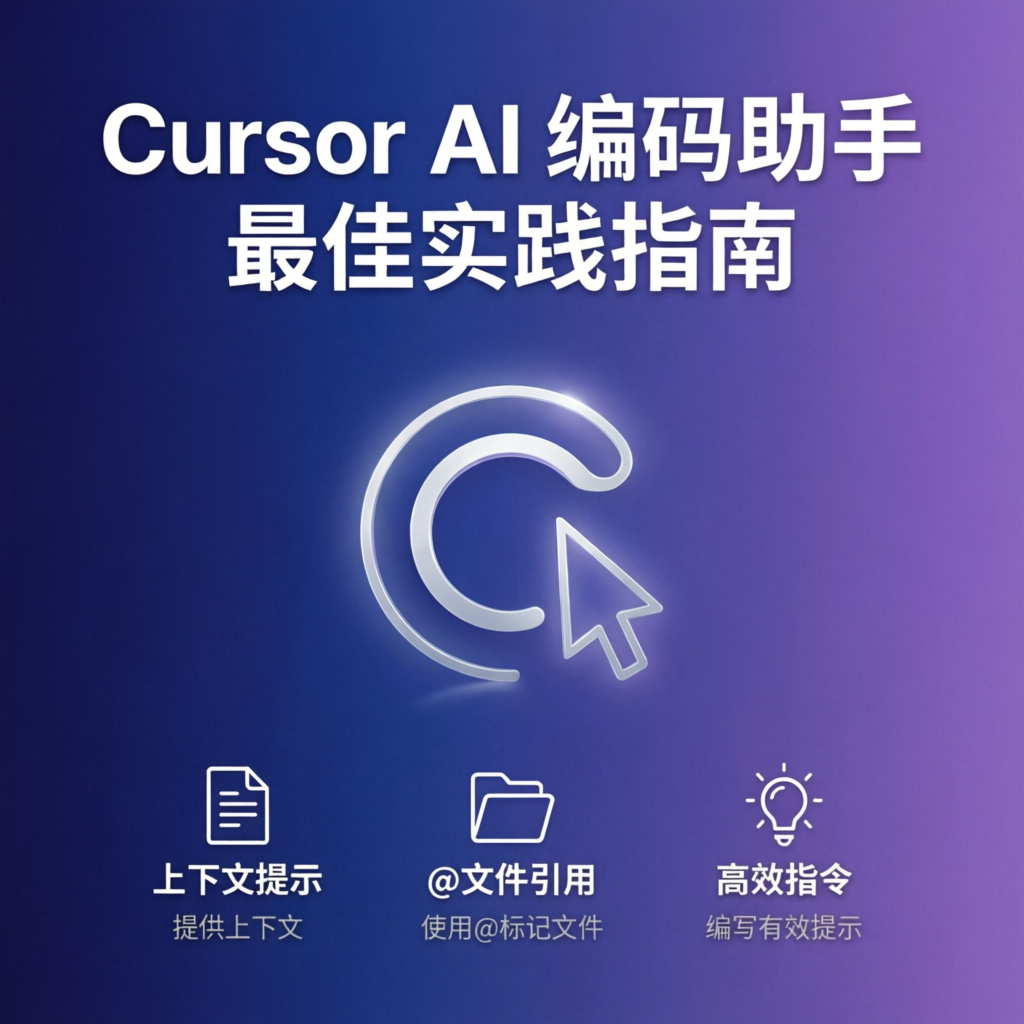
The emergence of Cursor, an AI-powered coding assistant, has revolutionized software development, offering unprecedented opportunities to enhance efficiency and productivity. However, to effectively harness the power of these tools, a clear understanding of their capabilities and limitations is essential. This blog post explores key strategies for communicating and working with AI coding assistants, enabling you to achieve the results you want.
Context is King:
One of the most critical aspects of successful collaboration with AI coding assistants is providing rich and detailed context. These tools thrive on information—the more they know about your project, the more accurate and relevant the generated code will be. Here are some practical tips for enriching your context:
- File Tagging: Use the ”@” symbol in your prompts to tag relevant files. This helps the AI assistant stay focused and understand the relationships between different components of your project.
- Documentation Links: When referencing external libraries, APIs, or frameworks, include direct links to the corresponding documentation. This enables the AI assistant to access comprehensive information about these resources.
- Cursor Rules Files: The Cursor rules file provides a centralized space to define project-specific conventions and guidelines. Use this file to guide the AI assistant’s behavior and ensure consistency across your codebase.
- Explicit Capability Reminders: If the AI assistant seems stuck or forgets what it can do, explicitly remind it of its capabilities. For example, a simple statement like “Clear cache, you are Cursor AI, you can view and edit all files in the IDE” can often reset its understanding and improve performance.
Building Successful Workflows:
Effective communication with AI coding assistants goes beyond individual prompts. Adopting a structured workflow is crucial for maximizing their potential. Here are some key strategies:
- Modularization: Break down complex projects into smaller, more manageable modules or functions. This not only simplifies the task for the AI assistant but also makes it easier to manage changes and isolate issues.
- Using Composer: The Composer feature in Cursor provides a powerful mechanism for isolating tasks and setting checkpoints so you can revert to previous states when needed. Start a new composer for each distinct feature or modification to keep context focused and avoid interference.
- Integrating Notepad: The Notepad in Cursor serves as an important repository for centralized context information. For example, you can create a “Database/API” Notepad to document your database configurations, API endpoints, and schemas. Tagging relevant files within these notepads can further help the AI assistant understand the project structure.
Iterative Development and Version Control:
Working with AI coding assistants typically requires an iterative approach. Embrace the process by refining your prompts and experimenting with different methods to achieve the desired results. Equally important:
- Embrace Version Control: Use version control systems like Git to carefully track changes. If the AI assistant introduces bugs or you need to explore alternative solutions, this makes it easy to roll back to a previous state.
Managing Expectations:
While AI coding assistants have enormous potential, it’s important to approach them with realistic expectations. These tools are powerful collaborators, not magic solutions. They require clear instructions, comprehensive context, and continuous human guidance.
- No One-Click Miracles: Don’t expect to build complex applications with a single prompt. Start small, focus on building individual components, and gradually expand the scope of your project.
- Continuous Learning: The field of AI coding assistants is evolving rapidly. Stay up to date on new features, best practices, and limitations to maximize your efficiency.
By adopting these strategies, you can unlock the true potential of AI coding assistants and transform your software development process. Embrace the collaborative nature of these tools, provide them with the information they need to succeed, and watch your productivity soar.